Is your furnace blowing cold air in Trafalgar or Central Indiana? Learn common causes, simple checks you can make, and when to call HRS Heating & Cooling.
When the temperature drops in Central Indiana, a furnace that suddenly blows cold air can make your home uncomfortable fast. Sometimes the cause is simple, such as a thermostat setting or a clogged filter. In other cases, cold air may point to an ignition, airflow, or safety-control issue that requires professional attention.
If your system will not produce heat after a few basic checks, contact HRS Heating & Cooling for dependable furnace repair. HRS services all furnace makes and models throughout Trafalgar, Franklin, Greenwood, Whiteland, and surrounding communities.
1. The thermostat is set incorrectly
Start with the simplest possibility. Verify that:
- The thermostat is set to “Heat,” not “Cool” or “Fan Only.”
- The temperature setting is above the current room temperature.
- The fan is set to “Auto.”
When a thermostat fan is set to “On,” the blower can continue circulating air between heating cycles. That air may feel cool even when the furnace itself is operating normally.
If you are considering better temperature control throughout your home, HRS also installs smart thermostats and HVAC zoning systems designed to improve comfort and efficiency.
2. The furnace is in its normal startup cycle
Many gas furnaces run the blower briefly before the burners fully heat the heat exchanger. For the first minute or two, air from the vents may feel cooler than expected.
Give the system a few minutes. If the air never warms up, or the furnace repeatedly starts and stops, it is time to investigate further.
3. A dirty air filter is restricting airflow
A clogged filter can reduce airflow, contribute to overheating, and cause the furnace to shut down its burners for safety. The blower may still run, leaving you with cold air coming through the registers.
Check your filter and replace it if it looks dirty or has not been changed according to the manufacturer’s recommended schedule. Consistent filter changes are also one of the easiest ways to support better airflow and extend system performance between professional visits.
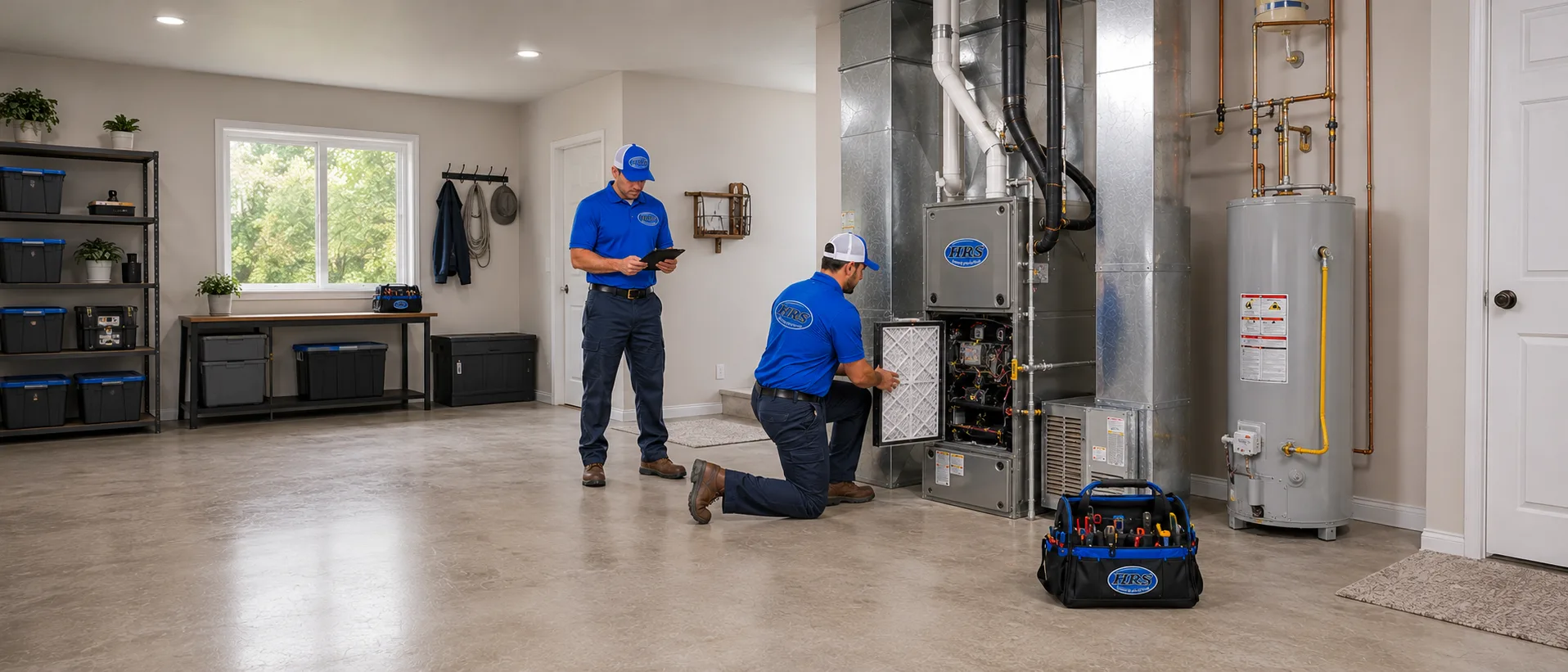
Regular HVAC maintenance and tune-ups give a technician the opportunity to inspect airflow, clean components, test safety controls, and catch developing problems before they become a no-heat emergency.
4. The pilot light or ignition system has failed
Older furnaces may rely on a standing pilot light, while newer systems commonly use an electronic igniter. If the pilot light is out or the igniter cannot light the burners, the system may run its blower without producing heat.
Do not attempt to disassemble gas-furnace components. If you smell gas, leave the home immediately, avoid switches or open flames, and contact your gas utility or emergency services from a safe location. For non-emergency ignition problems, schedule professional furnace service.
5. A flame sensor is dirty
The flame sensor is a safety component that confirms the burners are operating properly. If it becomes dirty, the furnace may light briefly and then shut down. This often looks like a repeated cycle: the furnace starts, the burners ignite, then they go out quickly while the blower continues.
A qualified HVAC technician can clean or replace the sensor and check for the underlying reason the furnace is failing to stay lit.
6. The condensate line is blocked
High-efficiency furnaces produce condensation during operation. If the condensate drain or line becomes blocked, a safety switch may shut down heating operation.
You may notice water around the furnace, a recurring shutdown, or an error code on the unit. This is best handled by a trained technician, especially if the issue is recurring.
7. The ductwork is leaking or uninsulated
Your furnace may be generating heat, but duct leaks or poorly insulated ducts can allow warm air to escape before it reaches your living spaces. Uneven temperatures, cold rooms, and unusually high heating bills can all point to airflow or duct-distribution problems.
For homes with comfort differences from room to room, HVAC zoning may also be worth exploring. Zoning uses separate temperature controls to improve comfort in different areas of the home.
8. The furnace may need repair or replacement
Frequent breakdowns, rising utility costs, expensive repairs, uneven heating, and an older furnace can all signal that repair may no longer be the best long-term choice. The right answer depends on the specific problem, the condition of the equipment, and the cost of the repair compared with replacement.
HRS offers guidance for homeowners weighing HVAC repair versus replacement, along with furnace, AC, heat-pump, and complete-system replacement options.
When to call HRS Heating & Cooling
Call for professional service if:
- The furnace blows cold air after thermostat and filter checks.
- The unit cycles on and off repeatedly.
- You hear unusual noises or see water around the system.
- Your carbon monoxide detector alerts.
- You smell gas or suspect a gas leak.
- The furnace stops working during cold weather.
HRS Heating & Cooling provides furnace, AC, heat-pump, and general HVAC repair across Central Indiana, with service for all makes and models. Call 317-535-0322 to schedule service.
Free Estimate
Ready for Total Comfort?
Get a free, no-obligation estimate from Central Indiana's most trusted HVAC team.
Tags